
Let's connect!
Thank you! Your submission has been received!
Oops! Something went wrong while submitting the form.
Keep up with Lula Commerce's Release Notes and Updates
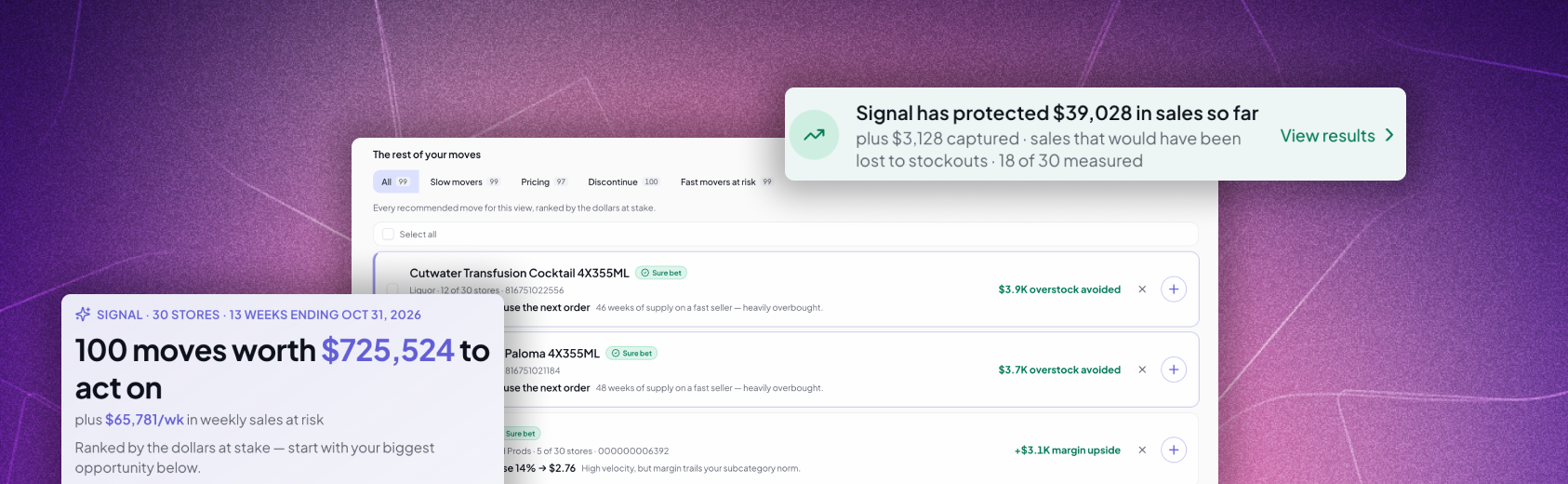
Introducing Lula Signal: a weekly action plan for your stores
Most analytics tools wait to be asked a question. Signal works the other way around. It reads the sales data you already generate, runs every item in every store, and hands back a ranked weekly list of the highest-value actions to take, in plain language, with a dollar figure attached to each.
At launch, Signal covers four things: stockout prevention (flags restocks before the shelf goes empty, even on items your own system still shows as in stock), pricing recommendations (margin gained vs. units given up, so a change only surfaces when it nets ahead), inventory optimization (sales pace, weeks of supply, and turn by store), and outcome tracking (every action scored on realized vs. expected dollars).
Every recommendation shows its reasoning, its supporting evidence, and a confidence rating. When the evidence is thin, Signal says so. And Signal runs independently of your delivery footprint. Stores don't need to be selling on DoorDash, Uber Eats, Grubhub, or a Lula Direct storefront to use it.
Stronger store-by-store guardrails for chains: Lula Direct can now hide and refuse anything a store hasn't confirmed it carries, even from a shared link or a recommendation, and keeps each store's own shelf price all the way through the cart. Switched on chain by chain.
Your menu hours, now enforced on your storefront: Menu hours you set in Store Manager (like no alcohol sales overnight) are now enforced on Lula Direct, judged on each store's local clock. Outside those hours, shoppers see when an item will be available instead of an Add button, and orders can't go through, now or scheduled.
Buy X Get Y promotions now publish to Lula Direct: Buy X Get Y promotions built in Store Manager now flow to your Lula Direct storefront, with company-scoped product and UPC rule matching and date-range validation at save time. Your Lula team can republish earlier promos on request.
Item sales by brand, in Insights: Item, product, and category reports can now be filtered by storefront brand, so a store selling more than one brand sees item sales for each.
More accurate item reporting: Item-level reporting now reflects what was actually fulfilled, not just what was ordered. Unit counts exclude items removed during fulfillment, and dollars line up with Sales Performance.
In-app help for Payouts and Reconciliation: The Payouts and Reconciliation reports in Store Manager now have a help button, page-by-page guidance, and a data dictionary.
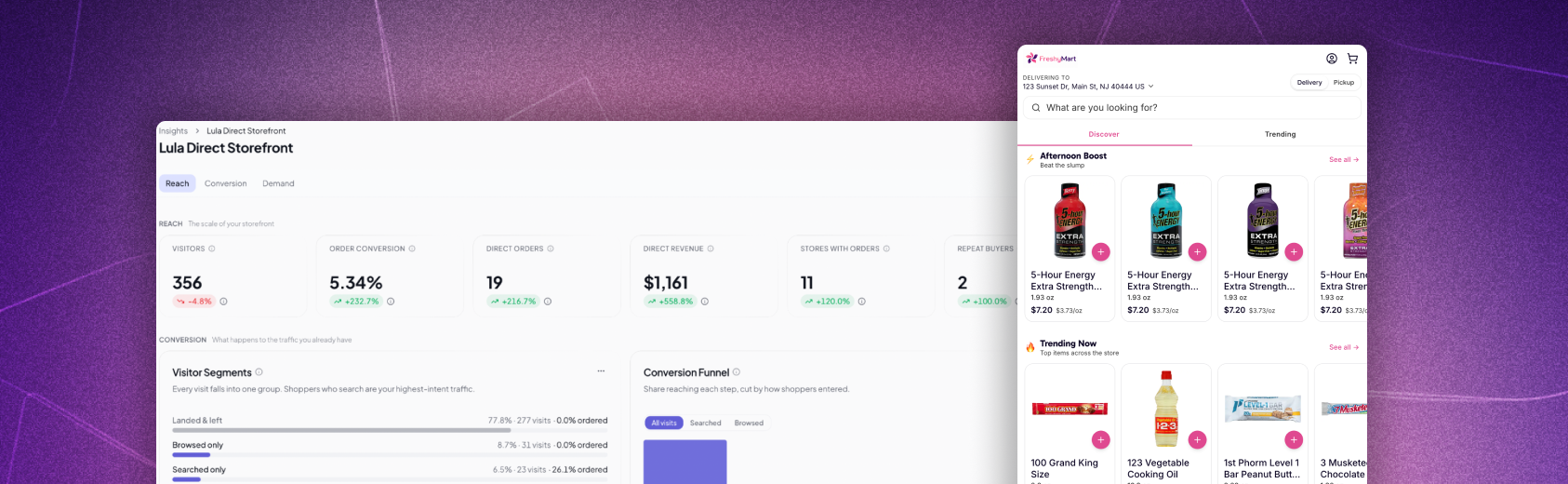
Loyalty, live on Lula Direct. Retailer loyalty programs are live on Lula Direct: Paytronix, PAR, PDI, and Patron Points, all on a single platform built to plug into the programs convenience retailers already use. Members open the store from their retailer's app already signed in, link their loyalty account with a phone number, and see rewards applied right in the cart. Learn more here.
Abandoned carts, won back automatically. When a shopper leaves items behind, Lula Direct can send a reminder email that brings them back to finish the order. Switch it on per store channel, pick the delay, and built-in safeguards prevent duplicate sends.
Search that finds what shoppers type. Exact word matches now rank first, and results, counts, and endless scrolling show only what the chosen store actually carries. The Trending rail on the home page shows only items that store stocks. Combo meals and 2-for deals open their option picker from any product tile, priced to match your delivery-app menus. "You might also like" recommendations are back on product pages and fill in as each storefront builds order history.
Improved storefront. Product photos are sized uniformly so shelves look tidy whatever the source image, tiles show pack size and price per unit, a reorder rail on the Discover page brings back past favorites, and shoppers can save items for later from the cart.
Built-in defenses against card fraud. Lula Direct now limits how many new cards and orders a single account can use in a day, asks for a billing ZIP code at checkout, and explains declines clearly to honest shoppers. Fewer disputes, cleaner books, and less exposure to chargebacks without putting friction in front of legitimate shoppers.
Every store gets its own shelf, prices, and rules. Shoppers now see what their chosen store stocks and, once per-store prices are set up, that store's own price. Switching stores triggers a warning before anything leaves the cart, pickup-only locations never offer delivery, and checkout requires a store choice so every order lands on the right tablet. Live on Lula Direct and switched on per retailer as each store's catalog is set up, so adding a store becomes a setup step, not a project.
Tobacco and alcohol, with state rules built in. Keep high-margin restricted categories selling online while the storefront enforces the rules for you. Lula Direct applies each state's tobacco delivery and flavor rules automatically, requires ID checks on alcohol and tobacco deliveries, and recognizes vapes, nicotine, and brand-name tobacco even when they're miscategorized, while everyday items like root beer stay unrestricted. An age restriction applied to an item is never undone by the next menu sync.
One store, more than one brand. A single location can now sell a second brand as its own channel on DoorDash, Uber Eats, Grubhub, and Lula Direct, with its own menu and logo (shown in Store Manager and on the store tablet in place of the delivery-app logo). The menu sync timeline labels every entry by brand, so you can see exactly which brand synced where. Service fees are set per channel: turn a channel off and its fee comes with it; second-brand menus on Lula Direct charge the fees you set.
Merchandising and promotions that publish themselves. Featured sections and banners you edit in Store Manager now appear on the storefront automatically, matched to each store's own stock and price. Banners can link straight to featured products, showcase specific products by UPC, and appear in new spots in search results and category headers. Promotions run exactly as configured (Buy X Get Y at the value you set, free delivery shown correctly), and the authoring experience got faster: automatic promotions no longer need a promo code, dates prefill from the campaign, ended promotions can be extended, and shoppers can type promo codes in any capitalization.
A new Storefront dashboard for Lula Direct merchants. For the first time, Insights shows what happens on your Lula Direct site before the order. Sales Performance tells you what sold; Storefront tells you why. The dashboard breaks down four things: an order funnel (visits → cart → checkout → payment → order) so you can see where shoppers leave; a closer checkout funnel where the biggest drop-offs usually happen; unmet demand, which lists searches that returned nothing ranked by how many shoppers made them and doubles as a shopping list of items worth carrying or making easier to find; and top products, the most-added items by number of shoppers. Available for Atlantis and Jacksons first, with more Lula Direct merchants coming.
A Storefront Brand filter for secondary-brand reporting. If you run secondary brands like Atlantis Cafe, f'real, or Krispy Krunchy, you can now filter every order-level report to a single brand. KPIs, drilldowns, and CSV exports all respect the filter. The channel list is simpler too: one DoorDash, one Uber Eats, no brand-suffixed duplicates. Earlier orders without brand attribution roll up under Main storefront, and item-level reporting per brand is coming soon.
Other Insights improvements. Catalog leaderboards now count completed orders only, so numbers won't be inflated by cancelled or denied orders. Rankings are unchanged, but expect figures to look a few points lower. Older payout columns are clearly labeled with their data cutoff so blank no longer looks like $0. Both Payouts Legacy tables now download every row matching your filters as CSV, not just the current page. The AI assistant in Explore shows a reminder to double-check responses, with a prompt to verify date ranges and store scope on anything you act on. And the Customers report was retired. Delivery platforms no longer send a consistent customer ID, and we'd rather drop a number than show one we can't stand behind.
Back-office promotions, automatically. Promotions from a PDI back office now flow into Lula on their own and apply across every connected sales channel.
A store tablet that keeps up with your team. The tablet now tracks food prep and the delivery driver as two separate statuses. Assigning a driver mid-prep no longer takes away the edit button, locked orders explain why, and delivery orders show driver progress, including the driver's name and arrival estimate when the delivery partner provides them. Scheduled orders got their own flow: when a scheduled order's window opens, it moves into the active queue, staff get a Scheduled Order alert, and a new Scheduled orders section carries its own alert setting. Owners can once again fix item prices and UPCs themselves, even on items that were previously blocked. Ready Check now works per brand and survives an app refresh.

The fastest way to a sale is helping shoppers find what they want before they lose interest, so we rebuilt discovery from the ground up.
Once a shopper finds what they came for, everything from the product page to the last tap is built to move them to checkout, and to grow the basket along the way.
We tightened checkout so the price a shopper sees is the price they pay.
Selling age-restricted categories online only works if compliance is airtight.
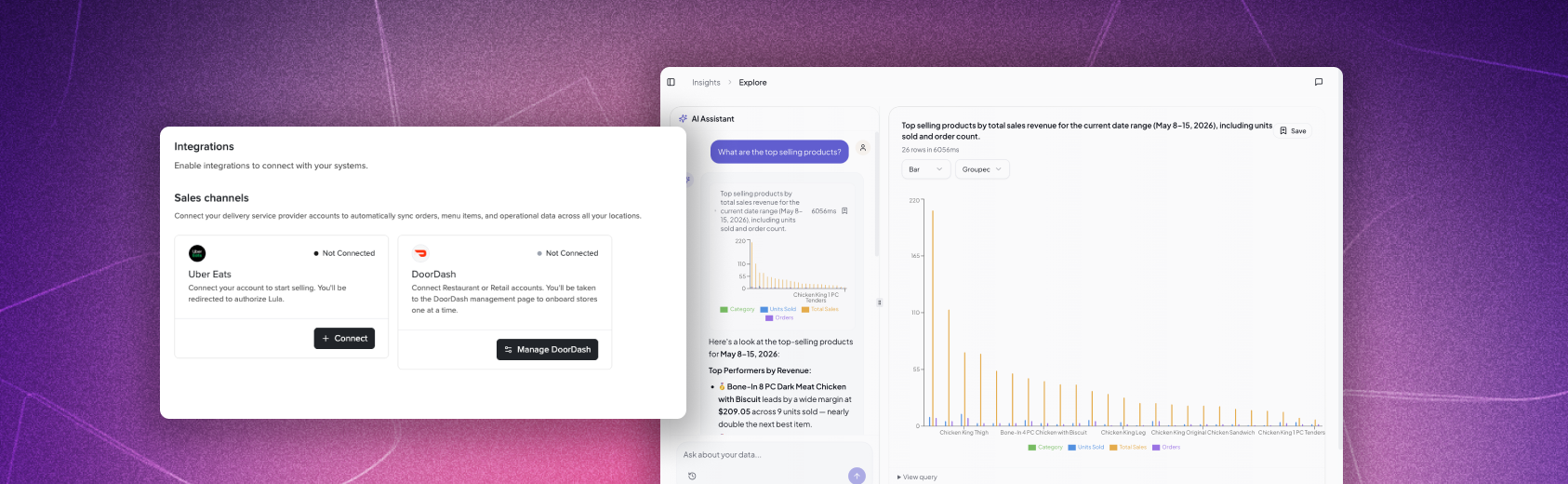
The Analytics page has been renamed to Insights and is now embedded directly inside Store Manager. Reports load in the same window with your existing login, and the "switch back to classic" option has been retired. Multi-company users will see the correct dashboard for whichever company they're scoped to.
A new top-level Financials tab in Store Manager surfaces your financial dashboard alongside Insights — same single-pane view, dedicated tab.
Request a new DoorDash Marketplace listing for a store directly from the Store Details page — no support ticket needed. Submit the form, watch progress in-modal (up to two minutes), and get a success modal with the new storefront URL you can copy and share. Status badges and toasts show Pending, Live, and Blocked at a glance, and the success state persists if you refresh the page.
The store name field now accepts up to 255 characters (was 50) — enough room for franchise + location descriptors.
item_id across upserts, removing a class of orphaned-record edge cases.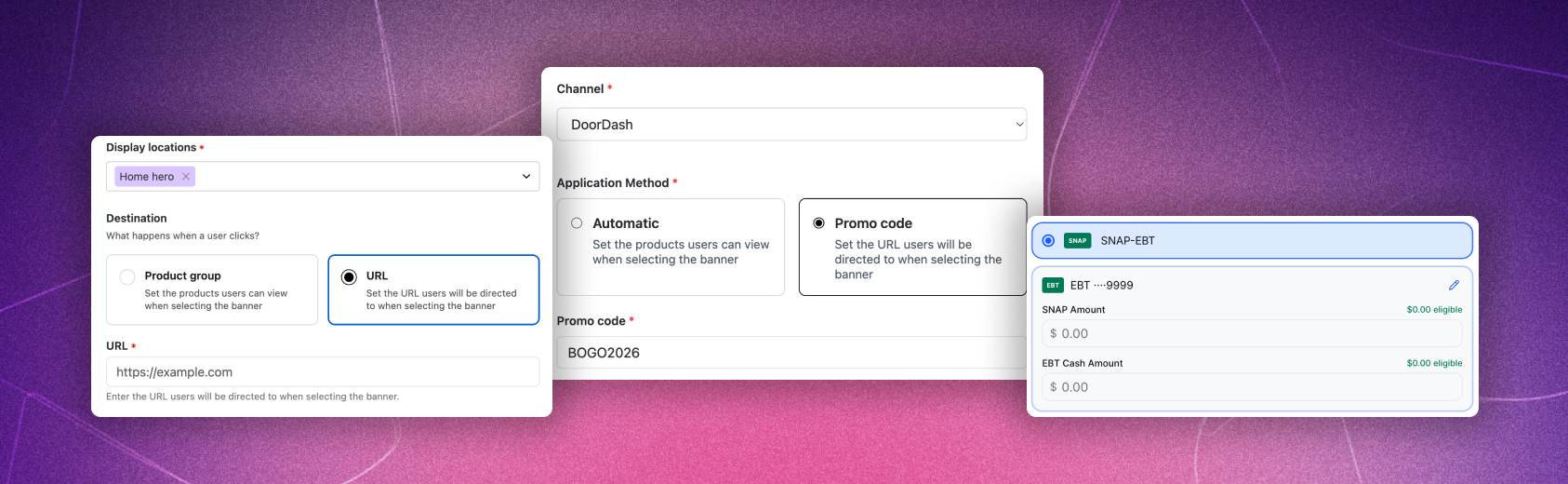
New
Fixed
New
New
Fixed
New
Fixed


